

El Oldsmobile Rocket 88 y el nacimiento del muscle car americano
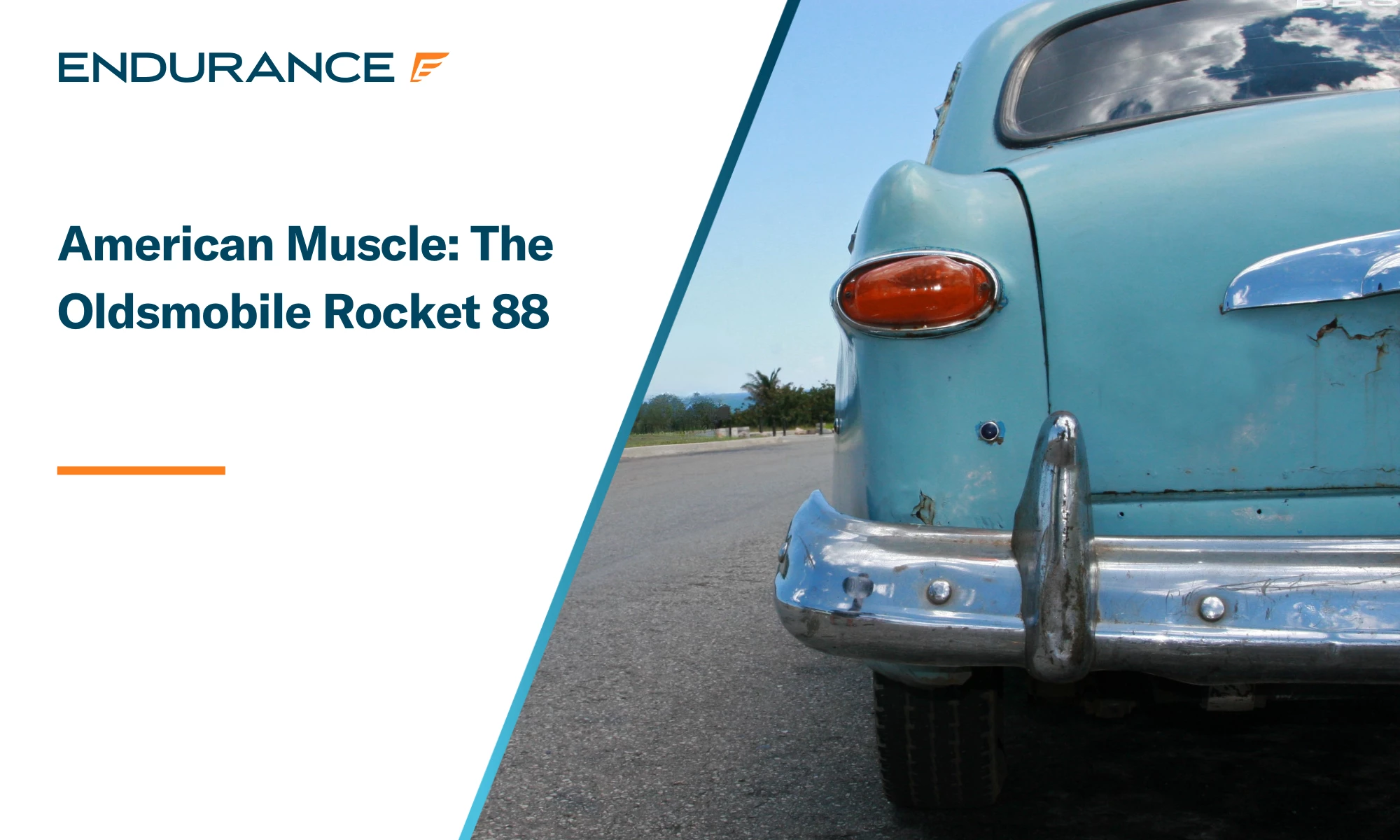
Before “muscle car” became a household term, one vehicle quietly set the stage for what would become a defining chapter in American automotive history. The 1949 Oldsmobile Rocket 88 is widely credited as the first true American muscle car, blending a lightweight body with a powerful new overhead-valve V8 engine.
In the late 1940s, automakers were locked in a horsepower race fueled by postwar optimism and engineering breakthroughs. The Rocket 88 didn’t just participate in that battle; it accelerated it. By putting serious performance into a relatively accessible production car, Oldsmobile helped spark a movement that would shape American performance culture for decades.
Engineering the First Rocket
El primer motor Oldsmobile de posguerra nació durante la huelga sindical que paralizó Producción de OGM from November 1945 through March 1946. During that period, Oldsmobile Motor Group designer Gilbert Burrell began working on concepts for new cars and engines. The design he was most fond of was the idea of a 90-degree angle-positioned V8, which allows for a balance of Potencial de potencia y tamaño físico.
After the designs were given to chief engineer Jack Wolfram and Oldsmobile general manager Sherrod Skinner, a new advanced design group to develop a new overhead-valve (OHV) V8 engine was organized, and work began.
Since the advanced design group envisioned an introduction for their new engine in the year 1949, the project was dubbed SV-49. The prototypes, which first ran in November 1946, were designed to take advantage of GM Research’s high-compression research. The high-octane fuels necessary to take advantage of really high compression ratios were not available with the technology of the time, so the displacement of the production engine increased.
Road tests were conducted later that year, and the new V8 went into production a few days before Christmas 1948. The new V8 was standard in the new 1949 Oldsmobile 98 before being refined for the 88.
The Rocket V8: Power Meets Practicality
Los Oldsmobile V8 representaron el inicio de varias tendencias importantes en Diseño de motor americano. Oldsmobile’s first OHV V8, dubbed the “Rocket” engine, was a large engine externally, but it was shorter and lower than the previous models, and as a result, it weighed quite a bit less. The Rocket 88 was capable of 0-60 mph (0-97 km/h) in a bit over 12 seconds and could reach an absolute top speed of 97 mph (156 km/h).
Sure, some later competitors were a bit faster all-out, and a few could beat the Olds off the line, but the 88 was a record breaker for America in 1949. The Rocket 88 would vacuum the cromo de los V8 de Ford (unless the Ford’s owner had made a substantial investment in aftermarket parts), and it took a semi-exotic, like the new Jaguar XK-120, to soundly beat it in a head-to-head.
Dominating the Track
Although Oldsmobile’s official involvement in racing was limited, the Rocket 88 cleaned up in competition. NASCAR held nine Grand National races in 1949, of which stock Rocket 88s won six. The following year, 88s won 10 out of 19 Grand National races and set a new speed record at Daytona. An 88 also won the first grueling Carrera Panamericana, the 2,176-mile (3,500-km) Mexican Road Race. (Ten of the thirteen 88s that entered that race managed to finish, which is itself an impressive feat).
More or less, stock Rocket 88s continued winning their classes at the drag strip well into the 1950s. The car was an icon that even had a song named after it. In fact, “Rocket 88” by Jackie Brenston and his Delta Cats is even considered the 1calle El mejor disco de rock and roll de todos los tiempos. Es apropiado, ya que los automovilistas consideran que el Rocket 88 fue el primer auténtico Muscle car estadounidense.
Sales Success and Industry Impact
Si alguien en GM hubiera tenido dudas sobre ofrecer el motor grande en una carrocería más pequeña, las ventas por sí solas habrían sido suficientes para convencerlos. Las ventas totales de Oldsmobile para el año modelo 1949, incluidas las exportaciones y la producción canadiense, fueron de casi 294.000, una mejora de 64% con respecto al año anterior. De esas ventas, 100.273 fueron del Rocket 88.
Inevitablemente, el 88 eclipsó al Oldsmobile 76, más económico, que todavía usaba un motor de seis cilindros en L de 257 pulgadas cúbicas (4213 cc). Mejor economía de combustible was quickly forgotten; gasoline was cheap, and speed sold more cars than cost-cutting. The 76 lingered for one more model year and then was dropped entirely; the division wouldn’t offer a six again until 1964.
Cadillac de El motor V8 OHV, que se lanzó casi al mismo tiempo que los nuevos Oldsmobile, fue en sí mismo un motor importante e influyente que le valió el primer premio al Coche del Año de Motor Trend, pero fue el Oldsmobile Rocket 88 el que desencadenó una avalancha. Uno por uno, todos los demás fabricantes estadounidenses lanzaron su propio motor V8 OHV: Chrysler y Studebaker en 1951; Lincoln en 1952; Buick y Esquivar en 1953; Vado y Mercurio en 1954; chevrolet, Pontiac, Plymouth, and Packard in 1955; and AMC in 1956.
Each of those engines had its own peculiarities, but they were all in the mold of the Oldsmobile Rocket engine. The OHV V8 would dominate the American industry well into the 1980s, resulting in some staggeringly powerful engines whose output has only recently been surpassed.
Protect the Performance Legacy You Drive
The Rocket 88 helped define American performance, and many of today’s vehicles still reflect that same engineering spirit. While modern engines are more advanced and complex than ever, costos de reparación have also increased as technology has evolved.
If your factory warranty has expired or is nearing its end, explore your auto protection options from Endurance. Get a FREE email quote o compre en nuestra tienda en línea para ver tu precio y recomendaciones de planes casi al instante.










Alex ha trabajado en la industria de servicios automotrices durante más de 20 años. Luego de graduarse de una de las mejores escuelas técnicas del país, se desempeñó como técnico logrando la certificación de Maestro Técnico. También tiene experiencia como asesor de servicios y gerente de servicios. Leer más sobre alex