

Why Fuel Pump Control Modules Fail More Often in Cold Weather
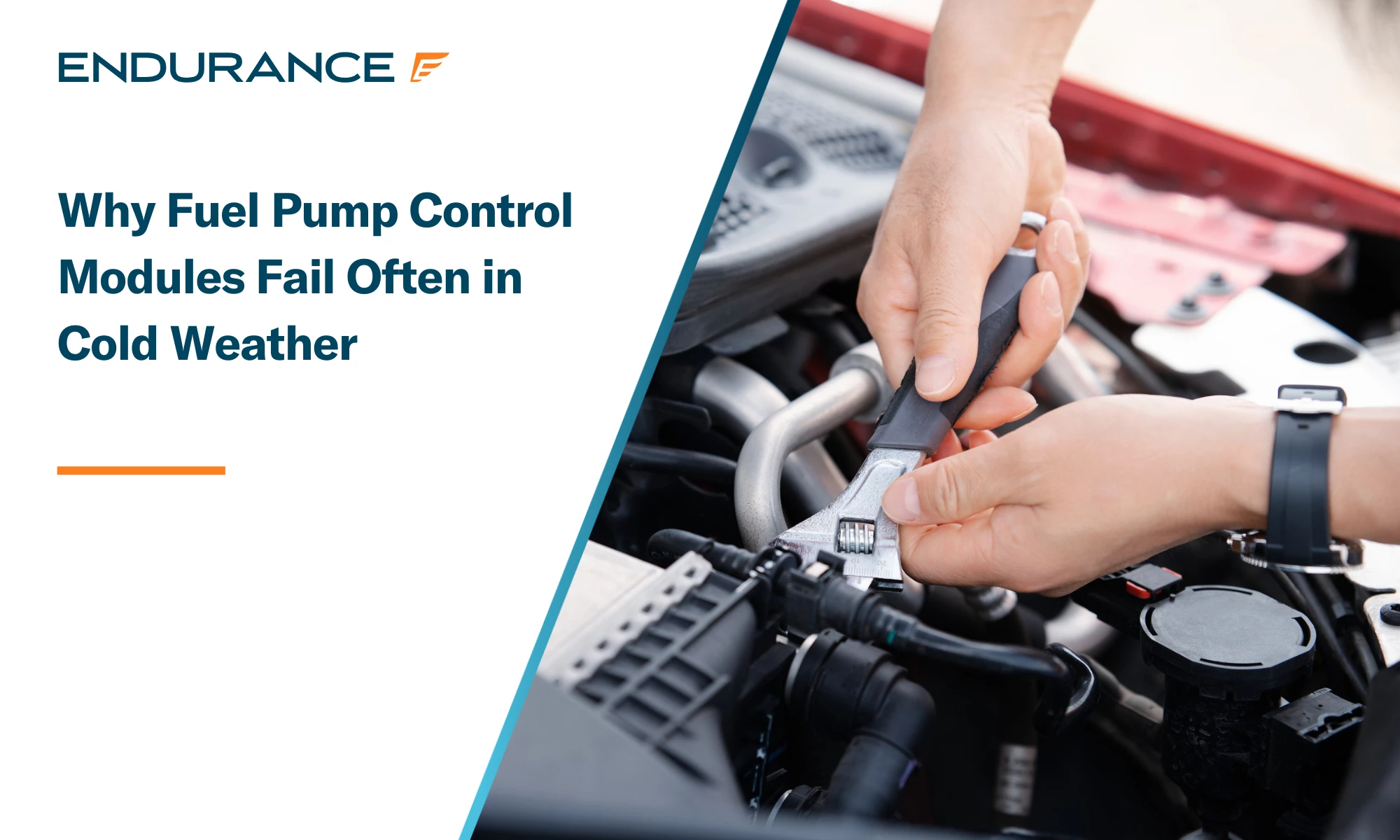
Most modern cars have a fuel pump control module—an electronic component that regulates the amount of fuel delivered to the engine and the pressure at which it’s delivered. Like many car parts, however, some drivers report that failures seem more common during colder weather.
In general, harsher climates put extra strain on your vehicle and can impact its performance in many ways. As well as this, the fuel pump control module can be susceptible to corrosion, especially in areas where road salt is frequently used. If corrosion reaches the electrical connector, it may lead to poor electrical connections or potential component malfunction.
Here we’ll take a closer look at fuel pump control modules, including their function, why they might fail during colder weather, and what you can do to safeguard yours.
What a Fuel Pump Control Module Does
Your vehicle’s fuel pump is regulated by a fuel pump control module (or FPCM for short). This electronic component works hard to ensure the engine receives the right amount of fuel at the correct pressure, which can fluctuate depending on driving conditions and engine demands. By precisely controlling the power sent to the fuel pump, the pump’s speed and output are constantly adjusted to maintain optimal fuel flow and efficiency.
Fuel pump control modules are so important because modern vehicles use fuel injection systems that rely on constant fuel pressure to function properly. By communicating with the Engine Control Module (ECM) or Powertrain Control Module (PCM), the FPCM receives data including the throttle position, engine load, temperature, and speed, using that information to determine how much fuel the pump should deliver. This means increasing the voltage to provide more fuel under heavy acceleration, and decreasing the voltage to save energy and reduce wear during idling or light loads.
As well as controlling fuel pressure, the FCPM also improves vehicle safety. If the car were to crash, roll over, or experience a sudden loss of power, it can quickly shut off the fuel pump in order to prevent fuel leaks or potential fires. Depending on the vehicle, modules can also perform diagnostic checks, monitor pump performance, and report issues like low pressure or circuit faults to the vehicle’s onboard diagnostic system.
Cold-Weather Stressors
When the cold weather rolls in, every component of your vehicle is put under extra strain—and the fuel system is no exception. Cold-weather stressors that can affect your fuel pump and the fuel pump control module include:
Cold Starts Mean Increased Electrical Load
Few things put more strain on your engine than starting during colder weather. When temperatures drop, engine oil thickens, components contract slightly, and battery capacity is reduced. Because of this, the starter motor has to work even harder, drawing more energy from the battery to do so. On top of this, the fuel pump has to deal with cold-thickened fuel and buildup, which makes an already difficult situation even harder to manage. Doing this repeatedly over the course of the winter season can be enough to make the fuel pump or fuel pump control module fail completely.
Thicker Fuel Is Hard Work
The cold thickens the fuel in your tank (even more so if your vehicle uses a diesel engine). As a result, the pump must work significantly harder to feed the engine at the required pressure, and the fuel pump control module works harder in turn. Driving for prolonged periods with this increased workload increases wear and tear and overheating, ultimately pushing components to their limits.
Corrosion From Road Salt
Road salt during colder months is a necessary evil. It allows us to drive without fear of losing traction, but it can wreak corrosive havoc on a car’s body and undercarriage. Where your fuel pump control module is concerned, corrosion can attack the module’s casing and expose the electrical connector. If corrosion affects the connector or its pins, it can create high resistance or electrical shorts. If it makes its way to the circuit board, failure is even more likely.
Condensation Can Freeze
Moisture in the air condenses on colder surfaces, including the inside of your fuel tank. If this happens, water can make its way into your fuel, which sinks to the bottom of the tank and causes contamination. Since most fuel pickups are located at the bottom of the tank, they can draw it in, reducing performance and straining components as they try to make up for it. Making matters worse, this water can freeze if temperatures drop low enough, with the resulting ice crystals forcing the fuel pump and fuel pump control module to work even harder.
Symptoms Drivers Notice and Trouble Codes
A failing fuel pump control module is a critical component that can trigger a range of symptoms that drivers notice when out on the road. These include:
Engine Cranks But Won’t Start
If you turn the key and hear the motor cranking the engine as normal, but the engine doesn’t catch or start, you’re most likely facing a fuel pump control module. This is because the fuel pump motor isn’t running, and therefore, pressure isn’t sufficient for ignition. You can try listening out for the fuel pump prime, which is a whirring or humming sound coming from the back of your vehicle. Turn the key into the ‘ON’ position without cranking the engine, and if you haven’t heard anything after a few seconds, you’ve most likely found the cause of your bad fuel pump.
Starting Problems That Come and Go
You may find that your vehicle starts up fine sometimes, but not others. This can be totally random sputtering or associated with certain circumstances (like colder weather). This kind of intermittency is most likely a dying fuel pump control module, either due to poor electrical connections or component wear and tear.
Engine Won’t Start After Refueling
Where many vehicles are concerned, this can be a common symptom when a fuel pump control module is on its way to a breakdown. When you fill your gas tank to full, air circulation around the FPCM is drastically reduced. This isn’t likely to be an issue during colder weather, but when things heat up, it can be enough to make a tired FPCM fail completely.
Stalling While Driving
The FPCM can fail intermittently while you’re on the road, which will instantly cut power to the fuel pump and cause the engine to stall. This is extremely dangerous, as it usually happens without warning and will do so regardless of the speed you’re going. In less severe cases, you might experience a loss of power when accelerating, which means that the FPCM isn’t delivering enough voltage/speed.
Check Engine Light Appears With a Fuel Pump Code
If the check engine lights up on your dashboard, it’s never a good sign. In most vehicles, it will also display an OBD-II Diagnostic Trouble Code (DTC), which tells you which specific component is experiencing an issue. See any of the following, and your FPCM is having trouble:
- P0230: Fuel Pump Primary Circuit Malfunction. This is a generic code that indicates the FPCM is experiencing a power problem.
- P0627: Fuel Pump “A” Control Circuit/Open. This code points to an open or high resistance circuit that’s affecting the FCPM.
- P0630: Fuel Pump Control Module Requested MIL Illumination. The FCPM itself is capable of detecting an internal fault—in this case, it’s asked the PCM to turn on the CEL.
- P069E: Fuel Pump Control Module Enable Circuit/Open. In a similar vein to P0627, an open circuit is disrupting the FPCM.
- P0087: Low Fuel Rail Pressure. Sometimes you might see other fuel delivery codes if the FCPM can’t provide the required pressure, despite the code not being specific to the FCPM itself.
Diagnosis and Typical Repair or Replacement
While you may have good reason to suspect a faulty fuel pump control module, it’s important to properly diagnose the problem before you try to fix it:
- Listen out for the fuel pump prime. Don’t hear it? Suspect your FPCM.
- Scan for Diagnostic Trouble Codes (DTCs). An OBD-II scanner will flag any issues, pointing you in the direction of the cause.
- Carry out a fuel pressure test. Low or zero pressure on the prime is a sign of an FPCM problem.
- Check fuses and relay. Find the fuel pump fuses and relay, check them visually, and try swapping them out.
- Inspect the FPCM visually. If you can safely jack up your vehicle, take a look at the FPCM and the connector.
- Seek a professional opinion. Electrical testing is effective but can be dangerous; therefore, it’s recommended to let trained mechanics do this for you.
Once you’ve confirmed that the FCPM is indeed the problem, you can try replacing it. To do so:
- Gather the correct tools. You’ll need a new FPCM, dielectric grease, an electrical contact cleaner, wrenches, sockets, screwdrivers, pliers, a jack, and a wire brush.
- Prepare. Park the vehicle on a level surface, engage the parking brake, and chock the wheels. Disconnect the battery and jack up the car on the driver’s side.
- Find and remove the old FPCM. Carefully disconnect the electrical connector and remove the mounting bolts.
- Clean the mounting area. Remove all signs of corrosion from the mounting area and vehicle harness connector pins. This will prevent the new fuel pump control module from corroding faster than it should.
- Install the new FPCM. Apply dielectric grease to the connector pins to repel water, tighten the FPCM into place, and reconnect the electrical connector.
- Reconnect the battery and test. Try a key test before lowering the vehicle, listening carefully for the fuel pump prime. If it’s safe to do so, start the engine and run it for a few minutes, ensuring there’s no stalling or other signs of a problem.
- Clear Diagnostic Trouble Codes. If your check engine light was what alerted you to the problem, use an OBD-II scanner to clear any DTC codes. If the light doesn’t reappear, you should be good to go.
- Lower the vehicle and test again. With the tires back on the ground, start it again and take it for a test drive. A properly functioning system should be quiet with no stalling or issues with acceleration.
It’s worth noting that work carried out by yourself that damages other components in your vehicle can void any warranty coverage you have in place, so seek the help of a certified mechanic if you aren’t absolutely certain you know what you’re doing.
Preventive Maintenance to Reduce Fuel Pump Failures
Even if your fuel pump control module hasn’t failed just yet, it’s smart to take preventive measures to reduce the chances of it happening. You can:
- Move the FPCM. There are aftermarket kits available, allowing you to relocate the FPCM somewhere higher and drier inside the engine compartment.
- Regularly wash the underbody. During the winter months, salt will build up under your car and cause corrosion unless you clean the underbody (and FPCM) regularly.
- Install a protector. You can buy or make a protective shield designed to deflect water and debris away from the FPCM.
- Apply dielectric grease and seal the connector. When installing a new fuel pump control module, make sure to use plenty of dielectric grease in the connector cavity. Then apply a thin bead of non-acidic silicone sealant around the seam where the connector plugs into the module.
- Keep your fuel tank at least half full. By not allowing your fuel tank to drop below half full, you prevent a number of potential problems and keep cold weather component strain to a minimum.
Fuel Pump Control Module Coverage Considerations
Should it fail, a fuel pump control model isn’t cheap to replace. If failure also spreads to the pump itself, you can find yourself facing a bill of over $1,000. For total driving confidence, you want an extended auto warranty watching out for you. But not all contracts are created equal.
When shopping for coverage, take the time to research reputable providers and compare their plans side by side. Ask for sample contracts and confirm that the FPCM is specifically included (or not excluded, as the case may be). For example, Endurance’s Supreme and Superior plans include fuel system components, and may cover the fuel pump control module depending on the specific plan and contract terms.
Better yet, Endurance Warranty Services offers more with a selection of useful perks, including 24/7 roadside assistance, rental car reimbursement, and trip interruption coverage. All of which can be lifesavers when out on the road during those cold winter months.
Your Car Deserves the Best Auto Protection
Whether it’s your fuel pump control module or something else entirely, no one likes a surprise repair bill—and they’re much more likely during cold weather. If you want to protect your wallet from unexpected trips to the auto shop, Endurance is here to help.
For more information on our comprehensive plan options, give an Endurance representative a call at (800) 253-8203 or see your price and plan recommendations through our online store.
If you’d like to do some more reading first, we have plenty of helpful automotive articles over on our extended warranty blog.










Since the age of 16, Keith has been immersed in the automotive industry, beginning his career by helping his dad fix vehicles at a young age. Keith now owns his own family-run, ASE Certified repair shop, A+ Autocare. At his shop, he focuses on building trusting relationships with his community through exceptional customer service. Read more about Keith.