

Get this deal! Call now.
Speak with a vehicle protection plan specialist and get $300 off any new contract instantly.
Call 866-678-4172
or scan the code below

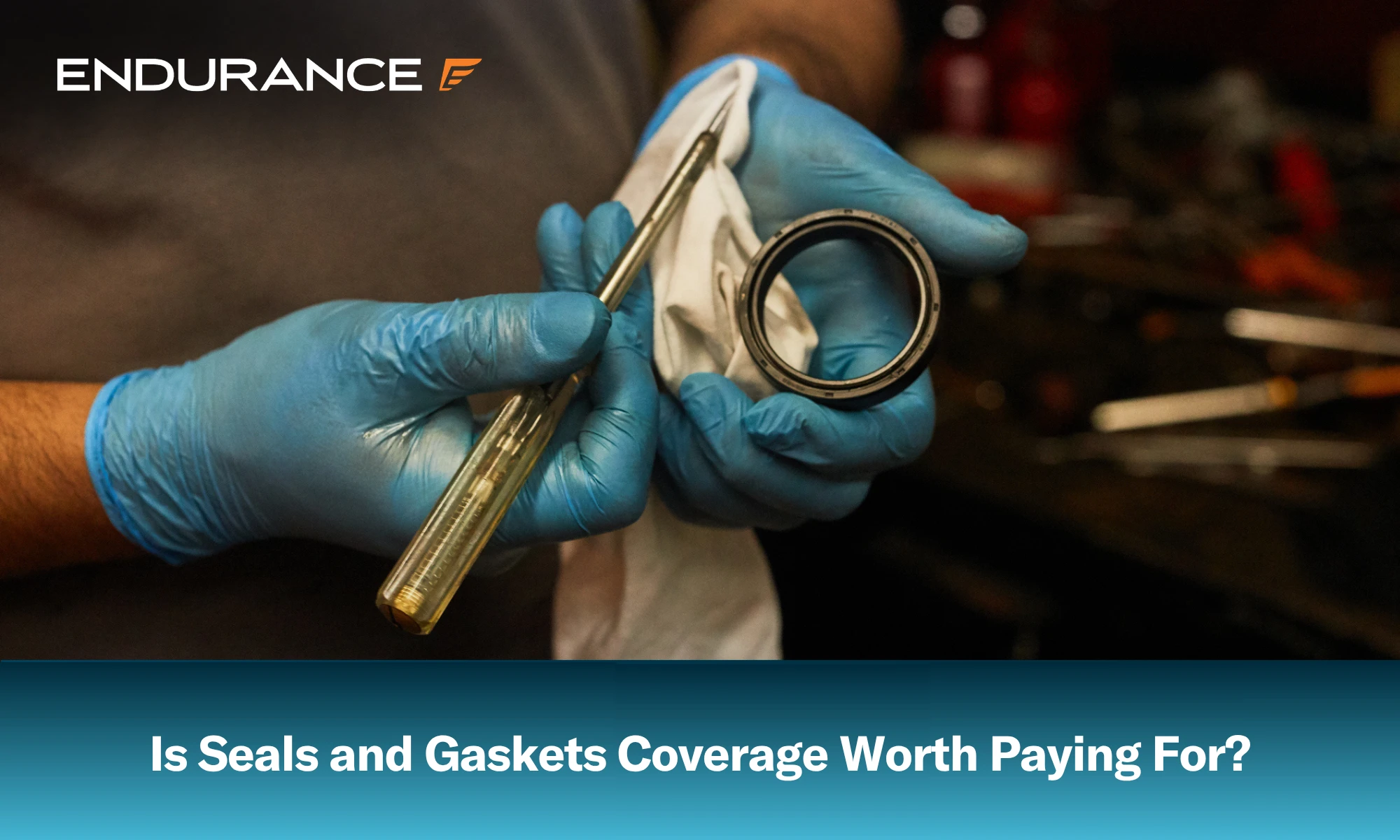
Imagine backing out of your driveway one morning only to spot a dark stain on the concrete where your car was parked. Putting it out of mind quickly, you ignore it for a week, compared to the stress of the day. Then, your check engine light comes on. After taking your car into the dealership or repair shop, you’re hit with a quote of nearly $2,800 to replace something called a head gasket.
Amidst your confusion, you begrudgingly shell out the money as you need to get back on the road. With the total average cost of operating a new vehicle reaching over $11,500 in late 2025, this repair can sink nearly a quarter of your annual vehicle budget in one moment.
Seals and gaskets are often the silent killers of an auto repair budget, and the question for many drivers is how they would handle an unexpected repair expense if one occurs.
Seals and gaskets have one crucial job under the hood of your car: keep fluids like oil and coolant where they belong and nowhere else. The engineering behind that simple goal is surprisingly precise, though. A head gasket, for instance, isn’t just a piece of rubber jammed into an internal pipe.
Modern multi-layer steel head gaskets stack three to five thin layers of embossed steel, typically with an elastomeric coating, to endure the thermal cycling between a cold start and the vehicle’s operating temperature. Even composite gaskets, featured in older vehicles, combine fiber and rubber compounds to achieve this result.
Valve cover gaskets are typically cork or silicone rubber, which can harden or shrink with age. O-rings sealing oil passages are usually a nitrile or silicone base, chosen for their chemical resistance, but both degrade over time as the rubber loses elasticity.
The failure of various seals and gaskets is almost always due to the same cause: heat problems.
Every time your engine goes from cold to hot, then back again, these materials expand and contract. After years of wear and tear, compounded by exposure to chemicals, vibrations, and sometimes deferred maintenance, seals and gaskets no longer conform. Instead, they harden, crack, and leak.
Vehicles approaching the decade mark or nearing six figures on the odometer may experience more seal and gasket wear as years of thermal cycling take a cumulative toll on elastomeric materials.
For such a simple purpose, the natural assumption would be that repair costs wouldn’t be brutal. However, the truth is different. Below are some typical cost ranges that can be expected for various seals and gaskets:
The most important thing to notice in the above range is the ratio of parts to labor. While the actual seals and gaskets themselves are not typically expensive items, the labor required to reach them in the vehicle is intensive, which results in a high labor cost.
A vehicle service contract (VSC), also called an extended warranty, typically takes one of two approaches to seals and gaskets: exclusionary or inclusionary coverage. The former means covering everything except a named list, whereas the latter means covering only specific components listed. Many mid-tier and entry-level plans are inclusionary, and coverage for seals and gaskets varies.
When they are included, coverage is frequently limited to secondary failures. This means that a major component needs to fail first, causing the seal or gasket to fail. If it fails on its own, separate from covered parts, it may not be covered.
Seal and gasket failures are a common repair concern in older, higher-mileage vehicles, resulting in numerous claim amounts. Third-party warranty or vehicle service contract companies need to price coverage accordingly, and given the frequency of these claims, some providers limit or exclude coverage for these components to balance long-term plan costs.
Not all coverage plans are structured the same way, and this is where Endurance plans may stand out. Our Supreme plan is our most comprehensive exclusionary option available, and is one option for drivers seeking broader coverage for seals and gaskets. Because exclusionary coverage plans cover everything except named exclusions, seals and gaskets are included in this plan.
Coverage eligibility and specifics depend on plan tier and your vehicle’s age and mileage. The Supreme plan isn’t a universal recommendation, as newer vehicles still under factory warranty or owners who plan to sell within the year may be better served by a lower-tier plan, such as the Secure Plus or Superior options.
Another feature of Endurance Warranty Services is that we serve as the direct administrator for most plans. This means that when you file a claim, you’re dealing with Endurance and not a third-party administrator. With over 20 years of claims data, Endurance has firsthand visibility into common repair cost concerns faced by vehicle owners. Seals and gaskets are near the top of that list.
To see the benefits vehicle service contracts or car warranties bring and why they’re worth it for seals and gaskets, it’s helpful to look at the math on an out-of-pocket vs. covered basis. Imagine a 2017 vehicle with around 90,000 miles getting quoted a $2,800 head gasket replacement.
Without coverage, you’re on the hook for the repair costs out-of-pocket. With a vehicle protection plan from Endurance, all you need to pay is your deductible, and the covered portion of the repair is handled directly between us and the repair shop.
The math becomes more impactful, though. A leaking head gasket can cause engine overheating, leading to further problems such as a warped cylinder head from excessive heat.
Replacing the cylinder head? An average total cost of $4,200-$5,000, including labor and parts.
A roughly $2,800 repair that’s deferred or underfunded because you don’t have the money right now can quickly spiral into a $5,000+ repair in a matter of weeks.
Endurance has been administering vehicle protection plans for over 20 years, and the Supreme plan was designed to provide broader coverage options for a range of covered repair scenarios.
Each aftermarket warranty coverage plan can provide you with peace of mind. This is in addition to a 30-day money-back guarantee and one free year of Elite Benefits, which includes extra perks like tire repair and replacement, windshield repair, and key fob replacement.
Whether you have a new car or a used car, reach out to an Endurance team member at (800) 253-8203 or request a FREE quote. You can also see your plan recommendation and pricing right away on our convenient online store.


We've received your vehicle information and will contact you shortly with your quote.
— OR —
Start shopping for a coverage plan now.


We're here to make sure you get the most comprehensive EV protection. That's why we've partnered with Xcelerate Auto to offer you transparent and dependable Tesla coverage.
Want us to contact you about XCare coverage for your Tesla?

Your protection is our top priority. Your quote is in progress and you will
receive a confirmation
email shortly.

Speak with a vehicle protection plan specialist and get $300 off any new contract instantly.
$300 off + FREE Elite Benefits for 1 year!
By clicking the button, you consent to Endurance using automated technology to call, email, and text you using the contact info above, including your wireless number, if provided, regarding auto protection or, in California, mechanical breakdown insurance. You also agree to the Endurance Privacy Policy and Terms and Conditions. Consent is not a condition of purchase, and you can withdraw consent at any time. Message and data rates may apply.
Speak with a vehicle protection plan specialist and get $300 off any new contract instantly.
Call 866-678-4172
or scan the code below

Simply fill out the information below and we will follow up fast with your free no-obligation quote.
By clicking the button, you consent to Endurance using automated technology to call, email, and text you using the contact info above, including your wireless number, if provided, regarding auto protection or, in California, mechanical breakdown insurance. You also agree to the Endurance Privacy Policy and Terms and Conditions. Consent is not a condition of purchase, and you can withdraw consent at any time. Message and data rates may apply.

To speak to a vehicle protection plan specialist and get $300 off any new contract instantly
Scan the code below


Based in the San Francisco Bay Area, Trevor is a digital content writer who discovered his love for cars while helping his dad restore a 1988 Mustang GT in their garage. Since 2020, he’s written extensively for the automotive industry, focusing on consumer auto advice, ownership guidance, and practical insights for everyday drivers.