

Get this deal! Call now.
Speak with a vehicle protection plan specialist and get $300 off any new contract instantly.
Call 866-678-4172
or scan the code below

In the future, we will likely see a dozen autonomous cars mapping the same street corner at once. Perhaps these cars will all come from different automakers and companies. However, they were all doing the same thing in 2018. They were creating digital, high-definition maps and routes in real time. These serve to get driverless cars moving among traffic. There’s no denying that self-driving cars demand powerful sensors to “see,” and those need to work together seamlessly with advanced software that lets them act and react. And so we were at a point in our automotive history where whoever makes and controls the best- or most-used version of these mapping technologies could be the one to win the competition for self-driving cars.
Today, we now have dozens of companies in a high-stakes competition to pioneer and perfect self-driving car mapping technology first and best. It’s an investment in research and development that could potentially yield billions of dollars. Think back to a few years ago, as smartphones and navigation websites & apps started coming into prominence. It was none other than Alphabet Inc.’s Google that came out on top in the world of consumer digital maps. More and more cars and drivers use Google Maps in order to evade rush-hour traffic or find their new favorite destination. And the way Google did this was by essentially blanketing nearly every nook and cranny of the globe. They used street-mapping cars and software and tech that no navigation company had. Even when Apple was developing its map app, it ended up throwing in the towel to Google. Now the competition is ready, and they do not want Google to even come close to winning.
Every company working on maps specifically for autonomous vehicles is taking one of two different routes. One approach sees the development of complete high-definition maps that will essentially allow driverless cars of the future to navigate and adjust to all on their own. The other, more ambitious method is for the new automobile sensors to gradually automate more and more parts of driving. Google is the only company taking both approaches while others are sticking to one or the other.
These days, no one is quite sure who is set to really win the so-called mapping wars. To be fair, even the big figures of the actual mapping industry are not quite sure either. Now, every self-driving car’s map tech looks and behaves completely differently from one another. Complicating matters is that every car is built completely differently and may use different sensor tech, not completely compatible with certain kinds of mapping tech.
With that kind of playing field, all sorts of mapping companies are taking different approaches to this kind of project. MobilEye wants to use a seamless transition from semi-autonomous to driving without human assistance. Meanwhile, DeepMap Inc. wants to build with only driverless functions in mind. DeepMap Inc is now working with Ford, Honda Motor Co., and China’s SAIC Motor Corp.
On the other hand, you have a company like Waymo. They’re also following DeepMap Inc.’s approach. They are, however, changing things up, coding the data from vehicle sensors into 3D maps to prepare a car to really react to the highway and different kinds of traffic conditions.
Not to be left out of this conversation and competition, we also have Uber. The ride-hailing service is working on new HD maps for its very own driverless program. While the broad strokes for their take are not really all that different from Waymo, they are also planning a way to include map-generating sensors inside the human-driven vehicles that provide their service. The maps in every Uber car already use the “static” navigation software in the application. This reads through most routes and driving decisions. These could be used to develop Uber’s driverless maps, and that makes them ahead of the curve. Access to ride-hailing map data is pretty much essential to the research and development of this technology.
Today, we’re mostly seeing automotive and tech companies focusing on just testing the waters as opposed to investing whole hog into one map system or another. Apple is developing its own in-house, however. Nearly every car company talks to the press about their work with Silicon Valley as primarily research. For now, one thing is for certain: no one wants a repeat of Google’s last map dominance. It’s just a matter of who actually lives up.

We've received your vehicle information and will contact you shortly with your quote.
— OR —
Start shopping for a coverage plan now.


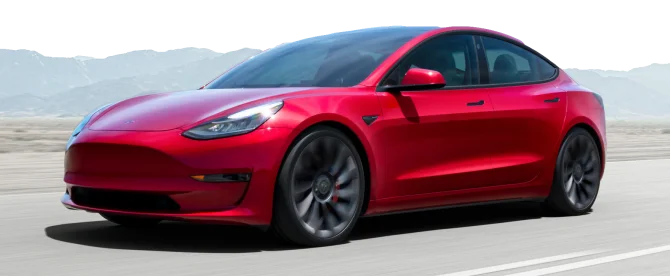
We're here to make sure you get the most comprehensive EV protection. That's why we've partnered with Xcelerate Auto to offer you transparent and dependable Tesla coverage.
Want us to contact you about XCare coverage for your Tesla?

Your protection is our top priority. Your quote is in progress and you will
receive a confirmation
email shortly.

Speak with a vehicle protection plan specialist and get $300 off any new contract instantly.
$300 off + FREE Elite Benefits for 1 year!
By clicking the button, you consent to Endurance using automated technology to call, email, and text you using the contact info above, including your wireless number, if provided, regarding auto protection or, in California, mechanical breakdown insurance. You also agree to the Endurance Privacy Policy and Terms and Conditions. Consent is not a condition of purchase, and you can withdraw consent at any time. Message and data rates may apply.
Speak with a vehicle protection plan specialist and get $300 off any new contract instantly.
Call 866-678-4172
or scan the code below

Simply fill out the information below and we will follow up fast with your free no-obligation quote.
By clicking the button, you consent to Endurance using automated technology to call, email, and text you using the contact info above, including your wireless number, if provided, regarding auto protection or, in California, mechanical breakdown insurance. You also agree to the Endurance Privacy Policy and Terms and Conditions. Consent is not a condition of purchase, and you can withdraw consent at any time. Message and data rates may apply.

To speak to a vehicle protection plan specialist and get $300 off any new contract instantly
Scan the code below


Alex has worked in the automotive service industry for over 20 years. After graduating from one of the country’s top technical schools, he worked as a technician achieving a Master Technician certification. He also has experience as a service advisor and service manager. Read more about Alex.