

Get this deal! Call now.
Speak with a vehicle protection plan specialist and get $300 off any new contract instantly.
Call 866-678-4172
or scan the code below

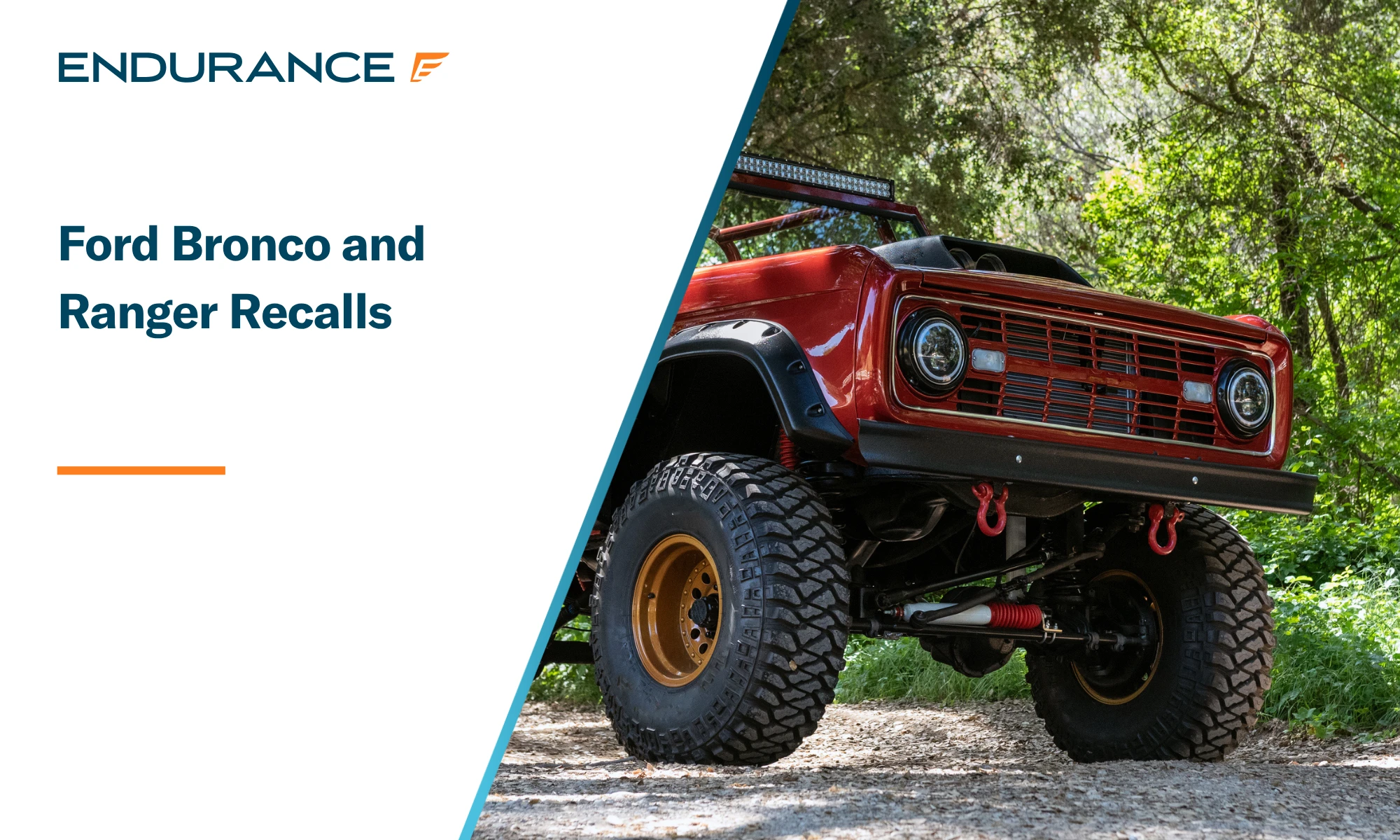
Owners of the Ford Bronco may be surprised to learn that the model was subject to two separate safety recall alerts in April 2026. The first affects nearly 5,000 Broncos from model years 2021 to 2025 and involves an issue in which improperly performed drivetrain repairs can create a rollaway risk. The second, and far larger, recall impacts nearly 180,000 Broncos and Rangers manufactured between 2024 and 2026. This recall centers on faulty seat bolts that may loosen or detach entirely.
If you own a Bronco produced in any of the above years, it’s important to check whether your specific vehicle is impacted. Dive into the specific causes of each of these recall alerts and how to check if you need to take your vehicle for a recall repair.
The first recall Ford Motor Company faces is narrow in scope but has severe consequences. Tagged in a recall by the National Highway Traffic Safety Administration (NHTSA), 4,922 Broncos are identified as potentially affected. What makes this recall unique is that the issue doesn’t stem from the factory. Rather, the impacted vehicles are those that received prior transmission or transfer case service and may have had those parts reassembled with a misaligned joint.
When this joint is misaligned, it can accelerate wear on the transmission output shaft splines and the transfer case input splines. The real-world impact of this is that the wear can progress to the point where two distinct failures become possible. First, the vehicle may lose drive power while in motion. The second and more serious potential consequence is that your vehicle’s park function may fail to fully engage, meaning that if you’re parked on an incline without the parking brake, your vehicle may roll away.
Ford began investigating warranty claims related to this issue in November 2025 and confirmed the root cause (joint misalignment) in January 2026. The recall was later expanded to cover 2021–2025 units. Owners may notice grinding or clunking noises from the drivetrain, but some vehicles may not display noticeable symptoms before failure occurs.
The second recall related to relatively new vehicles in the Ford lineup affects a grand total of 179,698 vehicles. More specifically, as outlined in the NHTSA recall report, 117,443 Ford Broncos and 62,255 Ford Rangers manufactured at Ford’s Michigan Assembly Plant in Wayne, Michigan, between November 1, 2024, and October 1, 2025, are affected.
The cause of this issue was traced back to a supplier’s assembly process. During the manufacturing process, an adhesive applied to front seat bolt fasteners should have fully cured before the bolts were torque-checked. However, as reported, a supplier failed to complete the torque check after the adhesive cured, which can cause bolts to loosen over time and even potentially dislodge.
This can cause safety issues, such as front seats being unstable while driving on the road, and even dislodging during a serious event, such as a crash. Ford vehicles in the past have faced a similar issue, such as an older 2025 recall impacting 163,000 vehicles, which involves a similar assembly-process concern.
For the rollaway recall, the fix is a physical inspection by the dealership, followed by a full transmission and transfer case replacement if the damage is confirmed. There is no software update needed as it’s an entirely mechanical remedy. Interim notification letters began going out on April 27, 2026, and remedy notification letters are expected to be mailed between July 1 and September 30, 2026.
On the other hand, for the seat bolt recall, dealers will remove the front seats, inspect the fasteners, and replace any that show signs of loosening. Ford is planning to send interim notices to owners beginning on May 11th for this issue, with final remedy notification letters scheduled for mailing in July.
In both cases, Ford will cover the associated repair costs, meaning owners don’t need to pay out-of-pocket for recall repairs. The only thing that differs between the two recalls is their timeline, with the rollaway recall repair notifications stretching longer into the year.
For both recalls, you don’t need to wait to get a letter to find out if you’re impacted. The starting point is to check your VIN. You can do this either through the NHTSA Recall Lookup site or at Ford.com by entering your 17-character Vehicle Identification Number located on your dashboard.
If your vehicle is flagged for the rollaway recall, apply your parking brake every time you park, not just on inclines, until your Ford dealer has performed the inspection. Should yours be flagged for the seat bolt recall, watch out for any looseness, squeaking, or rattling coming from your front seats. If you notice any movement that wasn’t there before, get in contact with your local dealership to schedule a repair sooner rather than later.
Ford’s recalls address specific and documented manufacturing defects that come at the automaker’s expense. However, recall coverage is narrow by design. It applies only to the exact components cited in the recall and only for the exact reason cited, too. Repairs unrelated to the specific recall condition may still become the owner’s responsibility once factory warranty coverage expires.
This is a gap that a vehicle service contract (VSC), also called an extended warranty, is built to fill. Sometimes called a third-party auto protection plan, it can step in when the manufacturer’s original warranty has expired or has gaps. Depending on your coverage tier, a VSC can cover components ranging from the powertrain to advanced electronics.
Endurance Warranty alone has a number of flagship plans. For instance, the Secure Plus offering provides targeted stated protection for only the most important components under the hood, whereas the Supreme plan offers comprehensive protection most similar to the manufacturer’s warranty that accompanies a new car.
For Ford Bronco or Ranger owners who have already had to deal with recall-related headaches, this distinction matters. A transmission replacement covered under a recall is free. But if your vehicle develops an unrelated fuel or A/C issue, that’s a repair bill that a VSC may help cover.
With two active recalls for two separate issues outstanding, there’s one clear action item for Ford Bronco or Ranger owners: check your VIN today. If you’re covered by either recall, don’t hesitate to schedule a dealer appointment as soon as notifications begin. Once you address those issues, however, it’s worth considering the future of your vehicle’s protection.
Recalls address specific safety or manufacturing-related issues identified by the manufacturer or regulators, but what if you have a mechanical breakdown? Set up your vehicle for success after the factory warranty expires. Contact an Endurance auto protection specialist at (800) 253-8203 or request a FREE email quote. You can also shop our convenient online store to see your price and plan recommendation now.
Learn more about Ford recalls, including the Ford Escape, Ford Explorer, and Ford F-150 pickup trucks, in our Vehicle Guides.

We've received your vehicle information and will contact you shortly with your quote.
— OR —
Start shopping for a coverage plan now.


We're here to make sure you get the most comprehensive EV protection. That's why we've partnered with Xcelerate Auto to offer you transparent and dependable Tesla coverage.
Want us to contact you about XCare coverage for your Tesla?

Your protection is our top priority. Your quote is in progress and you will
receive a confirmation
email shortly.

Speak with a vehicle protection plan specialist and get $300 off any new contract instantly.
$300 off + FREE Elite Benefits for 1 year!
By clicking the button, you consent to Endurance using automated technology to call, email, and text you using the contact info above, including your wireless number, if provided, regarding auto protection or, in California, mechanical breakdown insurance. You also agree to the Endurance Privacy Policy and Terms and Conditions. Consent is not a condition of purchase, and you can withdraw consent at any time. Message and data rates may apply.
Speak with a vehicle protection plan specialist and get $300 off any new contract instantly.
Call 866-678-4172
or scan the code below
Simply fill out the information below and we will follow up fast with your free no-obligation quote.
By clicking the button, you consent to Endurance using automated technology to call, email, and text you using the contact info above, including your wireless number, if provided, regarding auto protection or, in California, mechanical breakdown insurance. You also agree to the Endurance Privacy Policy and Terms and Conditions. Consent is not a condition of purchase, and you can withdraw consent at any time. Message and data rates may apply.

To speak to a vehicle protection plan specialist and get $300 off any new contract instantly
Scan the code below


Alex has worked in the automotive service industry for over 20 years. After graduating from one of the country’s top technical schools, he worked as a technician achieving a Master Technician certification. He also has experience as a service advisor and service manager. Read more about Alex.