

Get this deal! Call now.
Speak with a vehicle protection plan specialist and get $300 off any new contract instantly.
Call 866-678-4172
or scan the code below

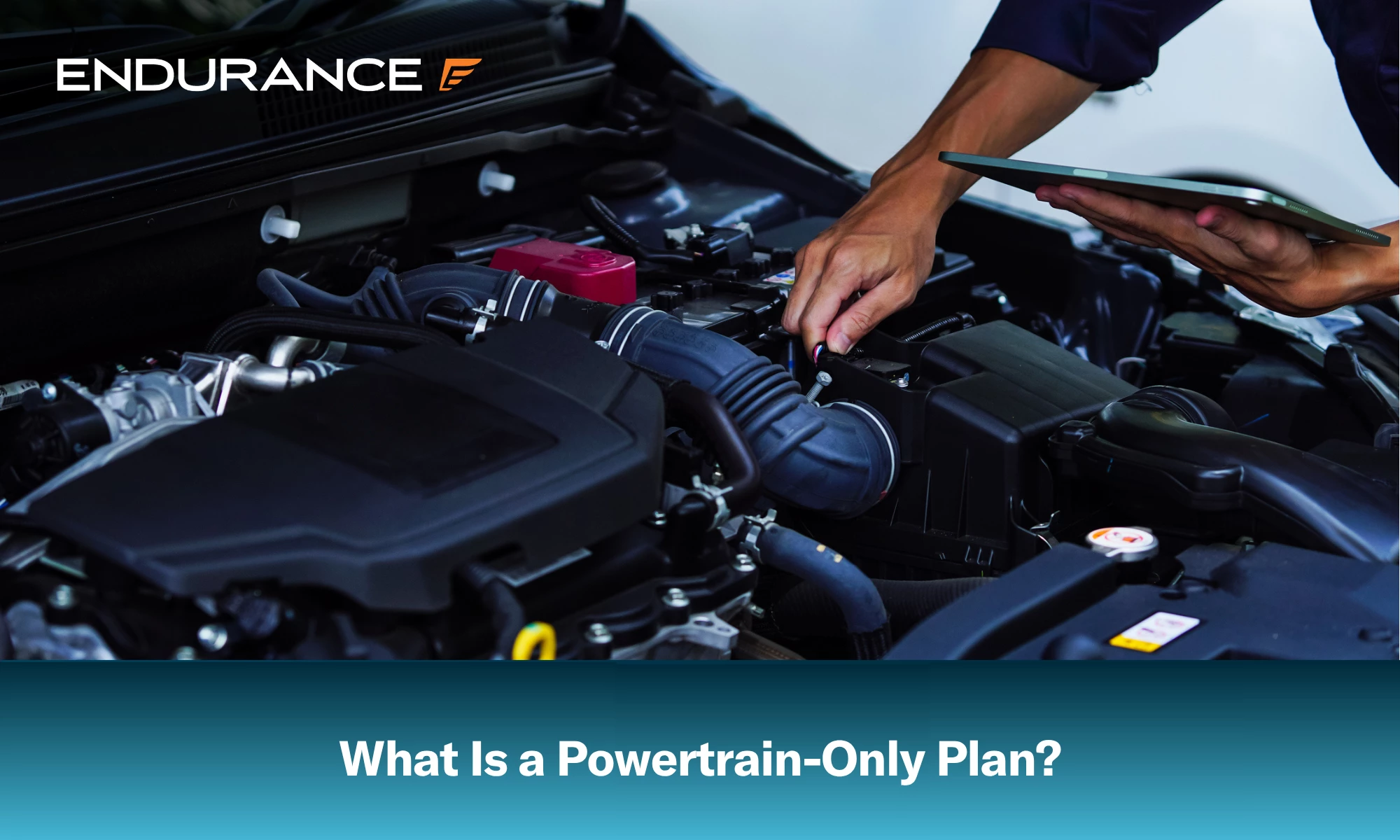
A powertrain-only vehicle service contract or extended warranty covers the components that generate and transmit power: the engine internals, transmission, drive axles, and related parts. It’s typically the most affordable coverage tier, and for the right driver, it can deliver real value.
But powertrain coverage has a narrower scope than many drivers realize. Components like the air conditioning compressor, alternator, power steering pump, and suspension aren’t included, and those repairs can easily reach $1,000 or more. Whether a powertrain-only plan is enough depends on your vehicle’s age, mileage, and how long you plan to keep it.
A powertrain plan is designed to cover the systems that generate and transmit power to the wheels of your car. This typically includes the internals of the engine, such as the pistons, crankshaft, camshaft, oil pump, and potentially related seals. On top of this, parts of the transmission, including the gears, torque converter, transfer case, valve body, and internal components, are also usually covered.
It’s also not uncommon to see standalone parts such as the driveshaft, differentials, axles, and CV joints included, too. These are all components that undoubtedly would produce catastrophic and high-dollar consequences if they were to fail. A transmission replacement alone can cost anywhere from $2,900-$7,100, to add some perspective on why this coverage is so beneficial.
This is where a powertrain-only plan can shine. When a covered drivetrain component fails, the contract may help cover certain repair costs that could otherwise be thousands of dollars. It’s not poorly constructed in its scope; it’s by design. However, it is exactly this narrowness that leads to consumer confusion regarding the reality of its effectiveness.
The components that fail most commonly outside the powertrain are often the ones that people feel most. Air conditioning, electric charging, steering, and suspension failures can all have very real impacts on a driver, though they don’t typically stop a car from running. However, on top of making driving uncomfortable, unreliable, or even unsafe, these repairs aren’t cheap either.
Below are some sample expenses that powertrain-only plans don’t cover that can help paint a clearer picture:
While these costs may seem outrageous at first glance, they are representative of rising labor costs in the entire auto market. Based on Reuters data released at the end of 2025, labor costs increased 3.4% in the last 12 months through December. This actually represents the smallest annual increase in four and a half years, going to show how much costs have risen post-pandemic.
The practical effect of this is that even routine non-drivetrain repairs cost meaningfully more than they did just two or three years ago. Paying out-of-pocket for these repairs now may be a harder financial position than it once was.
Having peace of mind on the road is important, whether that be regarding the effects of wear and tear or internal parts breaking down. Harboring secret doubts about the coverage of your powertrain-only plan, as well as how it stacks up against comprehensive options, can help erode this peace. To determine whether or not your coverage is enough, consider the following two scenarios:
Unexpectedly, the transmission in your new vehicle fails. You receive a quote of $4,500 for a rebuilt unit with labor included. The powertrain plan on your vehicle kicks in, covers your repair after the deductible, and you’re back on the road for a fraction of the cost. This is the type of scenario your plan is built for, and it performed exactly as intended, with the value proposition being unambiguous.
On the other hand, consider a situation where you have a used car and over the course of twelve months the AC compressor fails, an oxygen sensor triggers a check-engine light, and a strut assembly falls apart. The combined annual cost for all these repairs could approach $2,500, and it would all need to be out-of-pocket, given that it’s out of scope for powertrain components.
Neither of the above scenarios makes the powertrain-only plan inadequate. Rather, it performed exactly as intended. As alluded to, scenario two may be more common in older or high-mileage vehicles where electrical, HVAC, and suspension systems wear in tandem with, or faster than, drivetrain components. Powertrain-only coverage is a narrower coverage tier, may be better suited for newer vehicles less prone to issues.
A powertrain-only is a reasonable choice under a specific set of conditions. It tends to work best for owners of newer or low-mileage vehicles (think under 60,000-miles) where the non-drivetrain systems are still relatively fresh. Similarly, if you are a vehicle owner with a financial cushion to handle potential repair costs, you could potentially absorb the impact of an alternator or AC repair without strain. It can also be beneficial for owners who have a shorter intended ownership window, meaning the risk exposure period is lower.
On the other hand, it fits less well for the opposite profile. Those with older or high-mileage vehicles, limited financial cushions for repairs, or those intending to own the vehicle for the foreseeable future may find a more comprehensive plan better suited.
Broader vehicle service contract tiers, often labeled as “stated component” or “exclusionary” plans, tend to cover a wider range of systems and may be a good choice. These plans typically carry higher premiums, but may help reduce the risk of exposure to certain out-of-pocket vehicle repairs in the same year.
Similarly, the Supreme plan by Endurance is an excellent example of a more comprehensive coverage option, offering broad coverage with an exclusionary structure similar to some manufacturer warranties.
The last thing any driver wants to be faced with is unexpected expensive repairs. A powertrain-only plan can deliver genuine value, but only if you fit the ideal profile for the plan type. If you are evaluating a vehicle service contract or extended car warranty, the honest starting point for choosing a protection plan is looking at your vehicle’s current mileage, its repair history, and a realistic picture of the years you intend to drive it. Match that profile to a coverage tier and not the other way around.
If you’re looking for a third-party provider who can suit your new or used vehicle needs, don’t hesitate to contact one of Endurance’s service plan advisors at (800) 253-8203 or request a FREE quote. You can also quickly see your plan recommendation and pricing through our convenient online store.




We've received your vehicle information and will contact you shortly with your quote.
— OR —
Start shopping for a coverage plan now.


We're here to make sure you get the most comprehensive EV protection. That's why we've partnered with Xcelerate Auto to offer you transparent and dependable Tesla coverage.
Want us to contact you about XCare coverage for your Tesla?

Your protection is our top priority. Your quote is in progress and you will
receive a confirmation
email shortly.

Speak with a vehicle protection plan specialist and get $300 off any new contract instantly.
Spooky Savings: $300 off + FREE Elite Benefits for 1 year!
By clicking the button, you consent to Endurance using automated technology to call, email, and text you using the contact info above, including your wireless number, if provided, regarding auto protection or, in California, mechanical breakdown insurance. You also agree to the Endurance Privacy Policy and Terms and Conditions. Consent is not a condition of purchase, and you can withdraw consent at any time. Message and data rates may apply.
Speak with a vehicle protection plan specialist and get $300 off any new contract instantly.
Call 866-678-4172
or scan the code below

Simply fill out the information below and we will follow up fast with your free no-obligation quote.
By clicking the button, you consent to Endurance using automated technology to call, email, and text you using the contact info above, including your wireless number, if provided, regarding auto protection or, in California, mechanical breakdown insurance. You also agree to the Endurance Privacy Policy and Terms and Conditions. Consent is not a condition of purchase, and you can withdraw consent at any time. Message and data rates may apply.

To speak to a vehicle protection plan specialist and get $300 off any new contract instantly
Scan the code below


Since the age of 16, Keith has been immersed in the automotive industry, beginning his career by helping his dad fix vehicles at a young age. Keith now owns his own family-run, ASE Certified repair shop, A+ Autocare. At his shop, he focuses on building trusting relationships with his community through exceptional customer service. Read more about Keith.