

Get this deal! Call now.
Speak with a vehicle protection plan specialist and get $300 off any new contract instantly.
Call 866-678-4172
or scan the code below

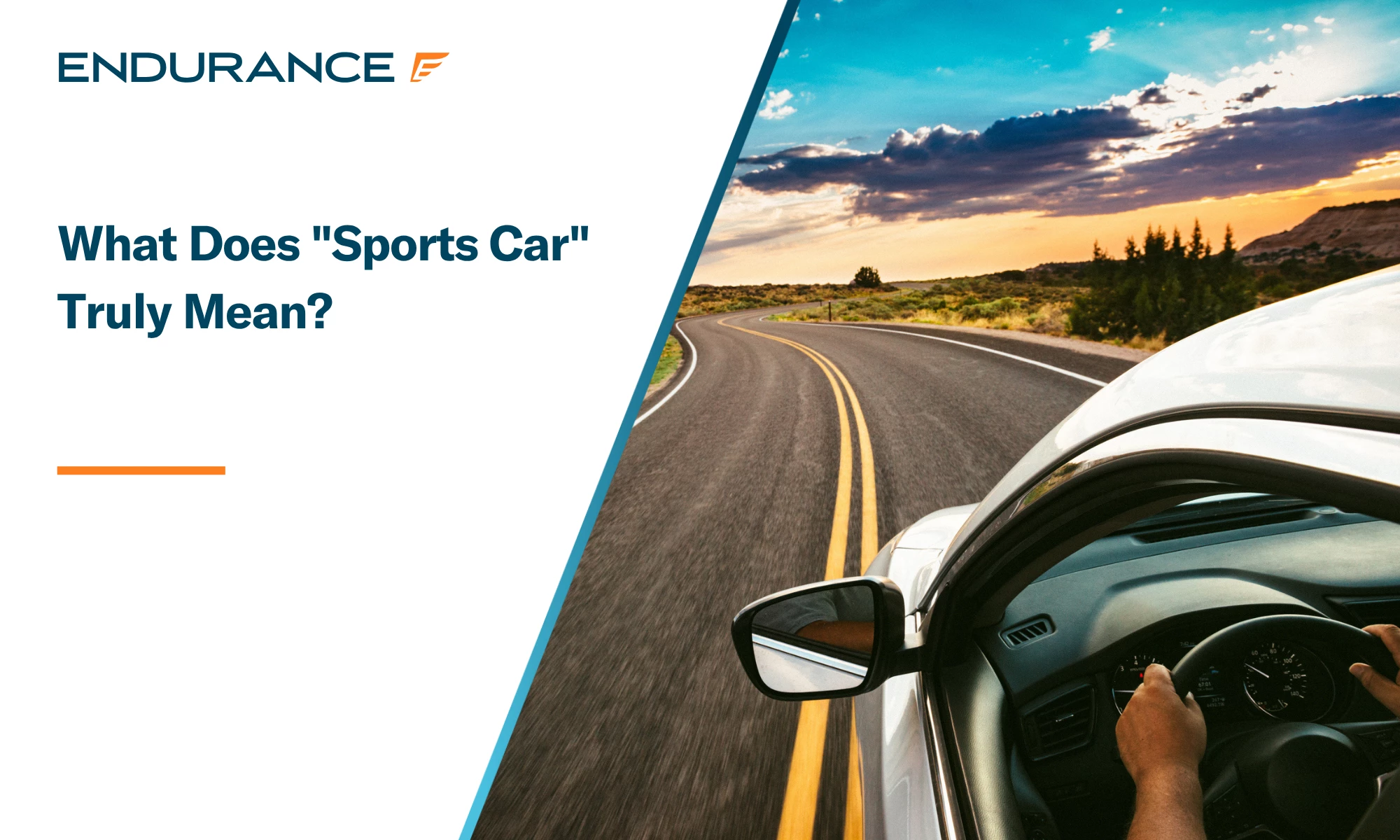
These days, almost every vehicle classification emphasizes the type of performance associated with “sports cars.” So what does that term even mean anymore? Before we get into the nitty-gritty about what a sports car truly is, we should at the very least go over why the actual definition is important.
This current generation of automobiles is an era in which drivers take performance and style for granted across all classes of vehicles.
There’s an insistence from luxury vehicle makers Mercedes-Benz and BMW, and a few other companies, that we refer to their fastback sedans as “four-door coupes.” Now imagine a scenario where you are walking down the street and a couple of Wall Street types pull up in an Audi S7 and mug you before speeding away.
What are the chances that you will describe that car to the police as “an Audi coupe?” You might say “sedan.” You wouldn’t say “sports car.”
Let’s return to the question at hand: what is a sports car? A sports car is built for performance and driver engagement first. It’s not strictly defined by seat count or whether it has a hardtop or convertible roof.
Historically, many early sports cars were lightweight, two-seat roadsters, but the definition has broadened as performance-focused vehicles have evolved. Early examples include models like the MG-TC, January XK-120, or Jowett Jupiter, which helped shape the category.
Those same early cars, but with a permanent hardtop, were actually considered a “Grand Tourer,” meaning it would be appropriate for a young ruffian to drive around Europe in varying weather conditions.
So the MGB-“GT” is an MGB sports car upgraded to Grand Tourer configuration. GT stands for “Grand Tourer.” Or even “Gran Turismo,” which is Italian for “Grand Tourer.” (Drop that knowledge on the next trivia night.)
So, in other words, the definition of “GT car” is more flexible than the definition of “sports car” because it was based on prospective usage.
Today, in the modern era, virtually anything from a Toyota GR86 to a Mustang to an Aston Vanquish would be considered a Grand Tourer, so we can all feel comfortable labeling them “GT cars.”
These all sound like tangents, so you’re probably reading this article thinking… “When did the definition of ‘sports car’ change?” The truth is, the definition has evolved over time.
What really happened was that cars themselves changed over time. In the funkadelic 1970s, safety regulators began to worry about rollover standards and crash protection. Thus, an entire generation of automobiles in the ’70s, from the Jaguar XJ-S to the C3 Corvette, was then conceived and sold primarily as hardtop Grand Tourers.
Since then, in almost every subsequent case, the “sports car” name following the mark or badge no longer applied, even though it technically persisted.
If the original 1953 Corvette was a sports car, and it was, then certainly that Corvette Z06 sitting in your garage (or dream garage) is a sports car, right? Sort of.
The “sports car” name was once used for vehicles actually meant to be an alternative to traditional sports cars; see the Porsche 911 and Datsun 240Z. Now reading all of this, you would think we’re trying to dictate what is and isn’t a “sports car”? Not really.
The reason we’re not is that it really doesn’t mean anything these days, except for the trim level of your vehicle.
There are, however, many cars out there that shouldn’t be referred to as “sports cars” by anybody who thinks of themselves as a gearhead:
Now for that last one, there’s really no harm in calling a fast sedan a sports car. These days, true sports cars are increasingly rare on showroom floors, with only a handful of models like the Mazda MX-5 Miata, Porsche 718 Boxster, and Nissan Z carrying the torch. Then again, if every car is a sports car, then no car is a sports car.
Maybe the lack of distinction between vehicle classes is a good thing in some respects. After all, some cars can stand to benefit from the features of others outside of their class. However, at that point, why would any automaker bother to build a true sports car anymore?
The definition may have blurred, but the passion behind it hasn’t. The team at Backspeed Boys tackles this exact question, breaking down what separates a real sports car from everything else on the road.
Whether you side with the purists or believe the definition has earned the right to evolve, one thing hasn’t changed: a great driving experience is worth protecting.
If you own a performance vehicle, keeping it covered with an extended warranty or vehicle service contract (VSC) can help ensure that the thrill of driving doesn’t come with the stress of unexpected repair bills.
If you’re ready to protect your car, call Endurance at (800) 253-8203 for a FREE coverage quote. You can also visit our convenient online store for instant pricing and plan recommendations.



We've received your vehicle information and will contact you shortly with your quote.
— OR —
Start shopping for a coverage plan now.


We're here to make sure you get the most comprehensive EV protection. That's why we've partnered with Xcelerate Auto to offer you transparent and dependable Tesla coverage.
Want us to contact you about XCare coverage for your Tesla?

Your protection is our top priority. Your quote is in progress and you will
receive a confirmation
email shortly.

Speak with a vehicle protection plan specialist and get $300 off any new contract instantly.
$300 off + FREE Elite Benefits for 1 year!
By clicking the button, you consent to Endurance using automated technology to call, email, and text you using the contact info above, including your wireless number, if provided, regarding auto protection or, in California, mechanical breakdown insurance. You also agree to the Endurance Privacy Policy and Terms and Conditions. Consent is not a condition of purchase, and you can withdraw consent at any time. Message and data rates may apply.
Speak with a vehicle protection plan specialist and get $300 off any new contract instantly.
Call 866-678-4172
or scan the code below

Simply fill out the information below and we will follow up fast with your free no-obligation quote.
By clicking the button, you consent to Endurance using automated technology to call, email, and text you using the contact info above, including your wireless number, if provided, regarding auto protection or, in California, mechanical breakdown insurance. You also agree to the Endurance Privacy Policy and Terms and Conditions. Consent is not a condition of purchase, and you can withdraw consent at any time. Message and data rates may apply.

To speak to a vehicle protection plan specialist and get $300 off any new contract instantly
Scan the code below


Alex has worked in the automotive service industry for over 20 years. After graduating from one of the country’s top technical schools, he worked as a technician achieving a Master Technician certification. He also has experience as a service advisor and service manager. Read more about Alex.